


2026 AO WInter Camp
Santa’s Sleigh Lab (Day Camp)
Santa’s Sleigh Lab (Day Camp)
This Christmas, Santa’s sleigh needs a next-generation upgrade — and he is inviting young innovators to join Santa’s Sleigh Lab. In this festive 4-day STEM engineering camp, students aged 9–12 become North Pole Engineers and take on an exciting mission: to design, build, test, and improve their own Christmas delivery vehicle inspired by Santa’s legendary sleigh and reindeer team.
Address
Address
AISL Harrow Hong Kong, 38 Tsing Ying Rd, Tuen Mun, Hong Kong
Fees include
Fees include
For day camps, the fee includes:
- Course textbooks and study materials
- All activities or excursions
- A branded academic individual student performance report
- Course certificate
- Healthy lunches each day, plus snacks
Please be aware that transportation to and from the camp, flight tickets, visa fees, and personal travel insurance are not included in the camp fees and should be arranged separately by the participants.
ไม่สามารถโหลดความพร้อมในการรับสินค้าด้วยตนเองได้


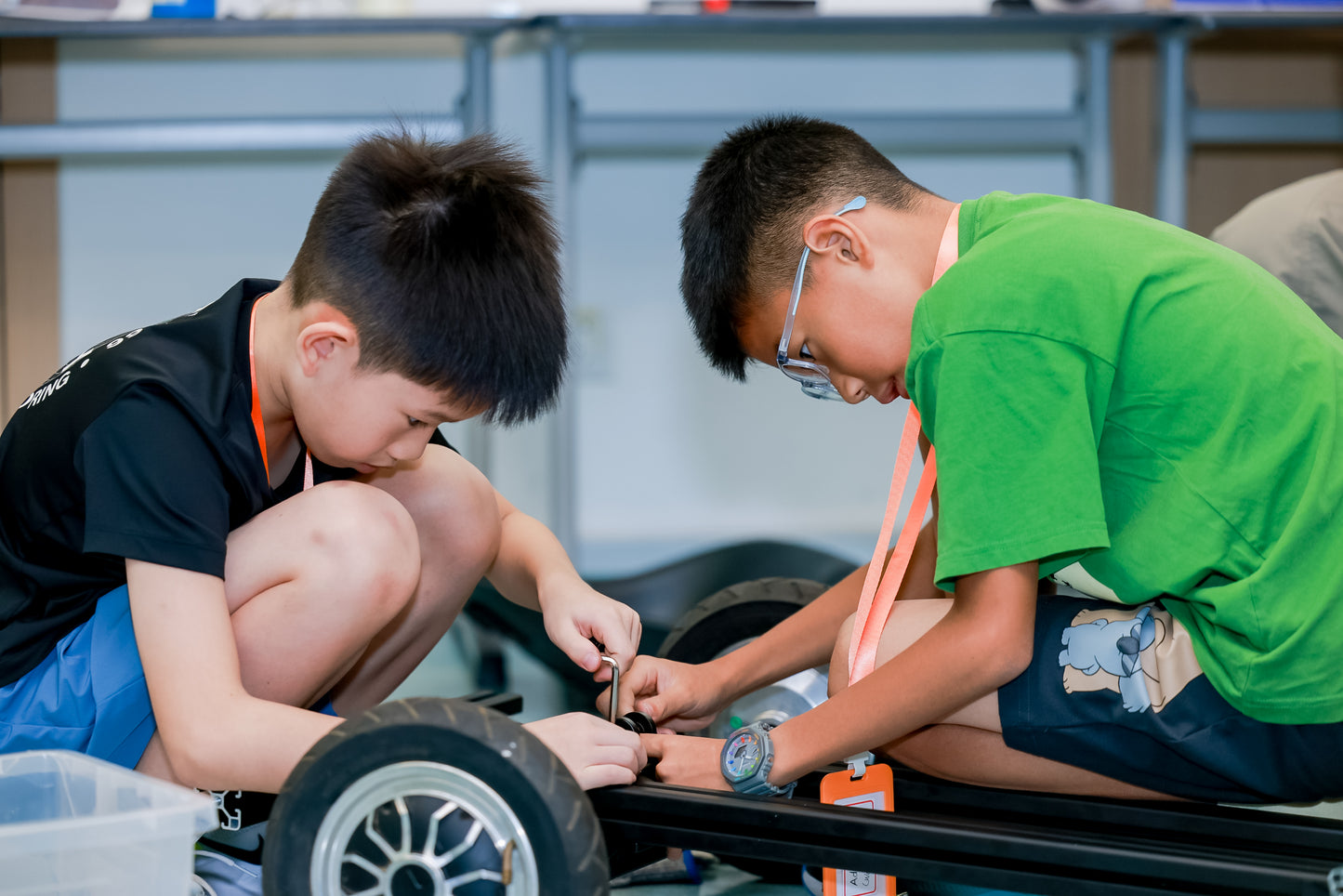
Through hands-on workshops and team challenges, students will explore the science behind vehicle movement and performance, including force, friction, balance, stability, speed, control, and energy transfer. They will follow the engineering design cycle — planning ideas, building prototypes, testing performance, analysing results, and refining their designs.
The programme builds towards the exciting North Pole Reindeer Racing Challenge, where teams put their creations to the test on a festive obstacle track and showcase how their engineering choices affect real performance.
Sample Timetable

Schedule may be subject to change.
Programme Highlights
1. Take on a Real-World Engineering Mission — with a Christmas Twist
Santa has delivered presents for hundreds of years, but the world is changing. More homes, more presents, tighter delivery routes — and one very important Christmas Eve deadline.
Students are challenged to think like engineers: how can they design a vehicle that is fast, stable, reliable, and able to handle a busy North Pole delivery route?
This festive scenario introduces students to real-world engineering thinking in a fun and meaningful way. They will learn that engineers do not simply build things — they identify problems, test ideas, compare results, and improve solutions.
2. Explore the Physics of Motion and Vehicle Performance
Students will investigate the scientific principles that influence how vehicles move, turn, speed up, slow down, and stay balanced.
Through interactive workshops and practical demonstrations, they will explore concepts such as:
- force and motion
- friction and grip
- balance and stability
- speed and control
- energy transfer
- vehicle structure and performance
They will begin to understand why some designs travel faster, some turn more smoothly, and some perform better on different track conditions — linking classroom science to hands-on engineering challenges.
3. Follow the Engineering Design Cycle
A key educational focus of the programme is the engineering design process. Students will learn to:
- identify the challenge
- brainstorm possible solutions
- sketch and plan a design
- build a working prototype
- test performance
- analyse what happened
- make improvements
- present their final design
This structured approach helps students understand that successful engineering comes from iteration — testing, learning, adjusting, and trying again.
4. Build, Test and Optimise a Reindeer Racing Machine
Students will design and construct their own Reindeer Racing Machine, applying what they have learned about physics and engineering.
Once their vehicles are built, they will carry out guided tests to measure and improve performance. They may compare how different design choices affect speed, stability, turning ability, and obstacle handling.
By collecting observations and using evidence to make improvements, students practise data-informed decision-making — an important skill in STEM learning.
5. Solve Challenges on the North Pole Obstacle Track
The festive finale is the North Pole Reindeer Racing Challenge, where teams put their vehicles through a Christmas-themed obstacle course inspired by Santa’s delivery route.
Students will need to apply their learning to overcome track challenges, such as maintaining balance, reducing unnecessary friction, improving control, and choosing the best race strategy.
This final challenge turns STEM knowledge into action, giving students a memorable way to demonstrate what they have learned.
6. Develop Collaboration, Communication and Engineering Confidence
Engineering is a team effort. Throughout the camp, students work together to share ideas, assign roles, solve problems, test designs, and prepare a short presentation about their process.
They will practise:
- teamwork and leadership
- communication and active listening
- creative problem-solving
- resilience after setbacks
- presentation and reflection skills
By the end of the programme, students will have developed not only a working racing machine, but also the confidence to think, speak, and problem-solve like young engineers.
Learning Outcomes
By the end of the programme, students will have opportunities to:
- Understand Key STEM and Physics Concepts
Explain how force, friction, balance, stability, motion, speed, control, and energy transfer can affect the performance of a vehicle. - Apply the Engineering Design Process
Use a structured engineering cycle to plan, build, test, evaluate, improve, and present a working racing vehicle. - Design and Construct a Functional Prototype
Build a Reindeer Racing Machine using provided materials and components, applying design choices that support performance, stability, and control. - Use Testing and Observation to Improve Performance
Carry out guided trials, observe how their vehicle performs, compare results, identify areas for improvement, and make design adjustments based on evidence. - Strengthen Critical Thinking and Problem-Solving Skills
Analyse why a design works or does not work, make informed decisions, and refine their approach through experimentation and iteration. - Collaborate Effectively in an Engineering Team
Work with teammates to share ideas, divide responsibilities, solve challenges, make group decisions, and support one another throughout the design process. - Communicate and Present Engineering Ideas
Explain their design process, describe the changes they made, reflect on what they learned, and confidently present their vehicle during the final challenge. - Build Confidence and Curiosity in STEM
Experience the excitement of engineering through a festive, hands-on challenge that encourages creativity, resilience, curiosity, and innovation.
Camp Details
Dates: 21-24 December 2026
Location: AISL Harrow HongKong
Time: 9:00 AM – 4:00 PM
Age Group: 9-12 years
Camp Type: 4 days Day Camp
Language: English
Prerequisites: Students should have at least a basic level of English to facilitate simple communication and follow instructions during the programme.
Terms and Conditions
We have a number of policies in place to assure the quality of our programmes, their administration and the safety of the children and staff who take part in them. Please take a moment to review our policies and guidelines.
Please also read through our Personal Information Collection Statement to understand how we may use your personal data.